
As we head into 2026, the pace of change across technology, security, and global markets shows no signs of slowing. For investors and operators alike, the most valuable insights often come from those building at the front lines – leaders who are navigating uncertainty, scaling through complexity, and spotting inflection points before they become consensus.
In this blog, we’re sharing forward-looking perspectives from CEOs across our portfolio on what they see coming in 2026. From emerging technology shifts and evolving customer demands to talent, capital allocation, and market dynamics, these leaders offer a candid view into the trends that will shape the year ahead.
Josh Araujo, CEO, Forterra

Global demand for autonomous mission systems will accelerate in 2026 as geopolitical tensions rise and major regions rearm at scale. Governments will shift from experimentation to procuring mature, production-ready systems, increasing scrutiny on companies’ ability to deliver real products, not prototypes, at volume. In a crowded defense-tech landscape, the winners will be those capable of sustained production, proven deployment and meaningful mission impact.
Ted Bailey, CEO, Dataminr, and Balaji Yelamanchili, CEO, ThreatConnect

With cyber defenders drowning in alerts amidst growing threats and an expanding landscape, they are seeking intelligence that is specifically tailored to their business rather than generic threat feeds. In 2026, CISOs will demand tailored threat intelligence specific to their organization, the specific threats they face, and the security controls they have in place. They expect this information to be communicated in business terms, with risks, threats, and security investments communicated in financial terms.

Amid flat budgets and staff shortages, cyberdefense leaders must cope with rising waves of sophisticated attacks, including adversaries supercharged with AI technologies. They need to know what’s happening in their environment without getting overwhelmed by information about the general threat landscape. They need to focus on whether their controls actually protect them from real risks, not theoretical ones.
Intelligence that can’t answer “How does this affect my organization” becomes noise. 2026 will be the year organizations will begin moving beyond just consuming threat feeds to actively correlating external threat data with their internal control effectiveness to understand their real exposure.
Dataminr recently acquired ThreatConnect, creating the industry’s first-ever Agentic AI-powered Client-Tailored intelligence.
Nir Minerbi, CEO, Classiq

Quantum computing enters 2026 with momentum and maturity. The conversation is shifting decisively from speculative hardware roadmaps to practical enterprise planning. This year, we’ll see quantum move from research labs into real-world hybrid workflows, with scalable software and integration strategies taking center stage. The winners won’t be defined by qubit counts alone, but by their ability to demonstrate measurable value in complex, classical-plus-quantum systems. For business and technology leaders, quantum readiness is no longer a question of if, but of how soon and how well.
Andy Lowery, CEO, Epirus

In 2026, asymmetric, robotic and growingly autonomous systems that swarm the skies, race over land, skate across seas and relay targeting data from spaced-based assets will continue to fundamentally reshape the nature of global conflict. The Sixth Domain will no longer be a conceptual framework but a battlespace reality. To meet this moment of strategic urgency, U.S. and allied militaries must overhaul how they build, buy and deploy weapon systems. Saturated swarm attacks will continue to turn the defense technology tides towards one-to-many capabilities that prioritize software-definition, AI integration, open architecture, modularity and scalability to counter this new class of threats. The consequences of continued dependence on legacy exquisite systems will become more pronounced — and potentially catastrophic. Those throughout government and industry that embrace and build for the cultural shift The Sixth Domain demands will best position themselves for victory within it.
Mariano Nunez, CEO & Co-founder, Onapsis

After the unprecedented wave of SAP zero-day attacks in 2025—which resulted in more than 500 compromised SAP customers and over $1.2B in reported losses at a major global UK manufacturer—we expect 2026 to bring even greater adversary attention to the broader enterprise application landscape. Threat actors now clearly understand that systems like SAP, Oracle, and Salesforce hold the operational and financial heartbeat of large organizations, and manufacturing remains one of the most exposed sectors due to its complex, highly interconnected environments.
In 2026, CISOs and CIOs will need to work more closely than ever to strengthen governance, visibility, and secure-by-design principles across these platforms. Organizations that treat enterprise application security as an operational imperative—not an IT task—will be best positioned to withstand the evolving tactics we’ve seen emerge over the past year.
Yaniv Vardi, CEO, Claroty

Digital transformation is booming—whether it’s cloud migration or the acceleration of AI—and it’s driving the exponential growth of cyber-physical systems (CPS). This is especially true in areas where the human workforce is being augmented or replaced with robotics and automation, such as Retail, Logistics & Warehousing, and Manufacturing. Nation-state actors and advanced ransomware gangs will increasingly target these hyper-connected environments, exploiting gaps left by immature or siloed security programs.
Consequently, we could see outages that ripple across supply chains on a national or global scale. As these risks mount, expect to see a stronger push, both from industry leaders and policymakers, for “secure by design” modernization and mandatory security frameworks to bring hyper-connected CPS environments in line with today’s cyber-risk realities.
Read more about this on the Claroty blog.
Wasim Khaled, CEO and Co-Founder, Blackbird.AI
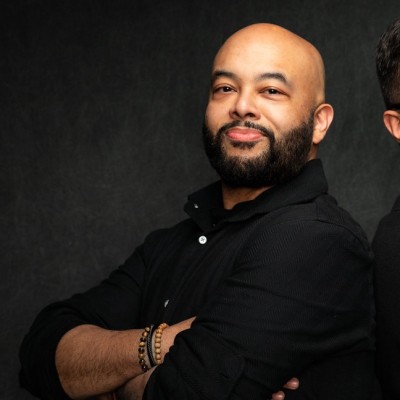
The cybersecurity world has shifted. Threat actors and nation states are operationalizing narrative warfare to target executives, companies, and countries. This is a new threat vector of ‘Narrative Attacks’ that are created by disinformation, misinformation, and deepfakes that cause financial, operational, reputational, and physical harm. The costs to create and execute these narrative attacks have collapsed and the consequences of them have exploded. To address this new threat vector, cybersecurity leaders need to ‘Know The Narratives’ that are targeting their executives, company and industry, who the threat actors, influencers and nation states that are behind it, how fast is it scaling and spreading across networks, is it bot influenced, and what cohorts and communities are escalating it to do harm. Disinformation Security and Narrative Intelligence does just that, protecting organizations from narrative attacks so that they can make informed, actionable strategic decisions before, during, and after a crisis to significantly reduce risk.
Stu Solomon, CEO, HUMAN Security

This year we hit a genuine inflection point as more than 50% of internet traffic is machine-based rather than human-driven, fundamentally reshaping our digital world. In 2026, machines will take the lead as the primary layer of digital interactions after a 6,900% increase in agentic traffic in 2025.
Agentic behaviors (like agents shopping, negotiating, or transacting on behalf of people) aren’t a tomorrow problem, they’re happening right now, expanding exponentially. This transforms the role of human oversight into an arm’s length activity, empowering trusted agents to act on our behalf. Trust, authority, and accountability will take center stage in enabling these systems. Next year, businesses will need to focus on guiding trusted AI agents, and disabling the rest, in a world that’s increasingly governed by machine-to-machine interactions.
Learn more about the NightDragon portfolio here.