NightVision Interview | Recorded live at Black Hat 2026, Las Vegas
THE TAKEAWAY
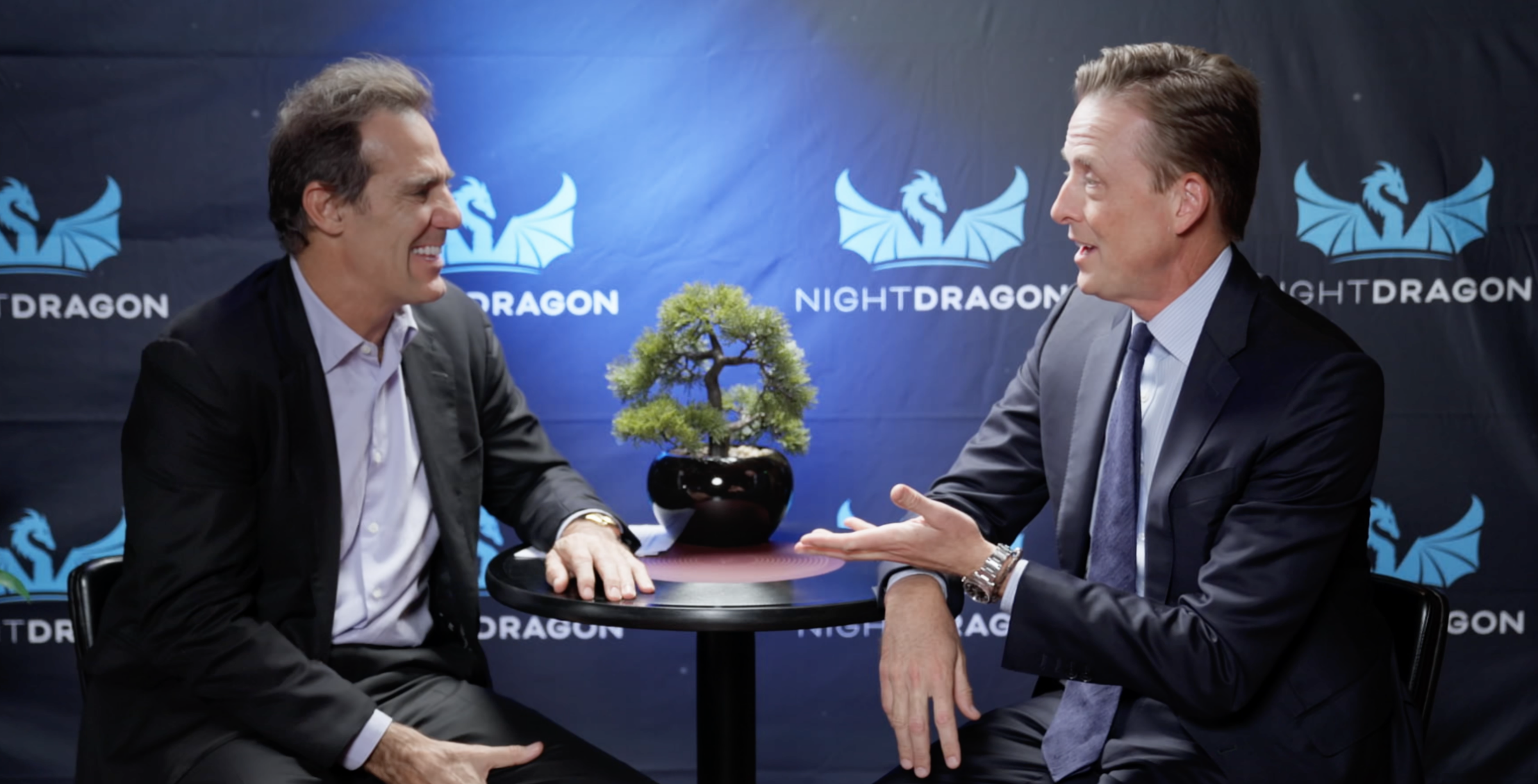
National Cyber Director Sean Cairncross joined NightDragon Founder & CEO Dave DeWalt live from Black Hat 2026 for a wide-ranging conversation on U.S. cyber strategy. Cairncross outlined the administration’s effort to “shape adversary behavior” through deterrence, explained how frontier AI is accelerating both offensive and defensive cyber capability at once, and called for Congress to renew CISA 2015’s information-sharing protections before they expire at the end of September 2026.
Speaking with Dave DeWalt during Black Hat’s annual gathering of roughly 30,000 security professionals in Las Vegas, National Cyber Director Sean Cairncross laid out the administration’s cybersecurity priorities for 2026 — a year he described as an inflection point, as frontier AI models simultaneously accelerate defensive innovation and lower the barrier for adversaries to build sophisticated exploits.
What is the National Cyber Director’s top strategic priority?
Cairncross said the administration’s national cyber strategy, released in March 2026, centers on one goal: shaping adversary behavior. That means treating cyberspace as its own strategic domain — not an afterthought to land, sea, air, and space — and establishing real consequences for attackers.
“There needs to be some level of… deterrence. There’s still a human being making these decisions, and we’ve got to make sure that they’re paying attention.”
Sean Cairncross, National Cyber Director
How is AI changing the balance between cyber offense and defense?
Dave DeWalt, reflecting on three decades in cybersecurity leadership including roles at McAfee, FireEye, and Mandiant, noted that 2026 has brought an “almost exponential” shift: frontier models are accelerating vulnerability research for defenders and attackers alike. Cairncross agreed the technology is dual-use by nature, but framed it as an American-led opportunity rather than a purely defensive scramble.
His office’s approach is to move fast — getting AI-enabled tools into defenders’ hands as quickly as possible — while balancing what he called the government’s “security equities” against that speed.
Why does public-private partnership matter more than ever?
Cairncross pushed back gently on the phrase “public-private partnership” itself, arguing it needs to mean real collaboration with skin in the game on both sides — starting with information sharing at speed and scale, since industry sees threats government doesn’t, and vice versa.
What executive actions has the administration taken on cyber, AI, and quantum?
Since March 2026, Cairncross said the administration has signed four executive orders relevant to his portfolio: one on cybercrime emphasizing private-sector collaboration, one on AI innovation and security, and two focused on accelerating the transition to post-quantum computing standards.
What is Cairncross most excited — and most worried — about in 2026?
Excited: the speed at which AI is enabling machine-speed red-teaming and blue-teaming, and the U.S.’s continued position setting the global standard for defending critical infrastructure while working with industry rather than regulating around it.
Worried: staying ahead of adversaries and finally introducing real consequences into a domain that has, in his words, lacked them for too long.
“Any organization reflects its leadership. The president has set the tone on this.”
Sean Cairncross, National Cyber Director
Watch the Full Interview
About NightVision
NightVision is NightDragon’s ongoing interview series, hosted by Founder & CEO Dave DeWalt, featuring conversations with the top government, military, and industry leaders shaping cybersecurity, defense, and national security. New episodes are available on the NightDragon site, YouTube, Apple Podcasts, Spotify, and Amazon Music.